Building the tools to ask new questions
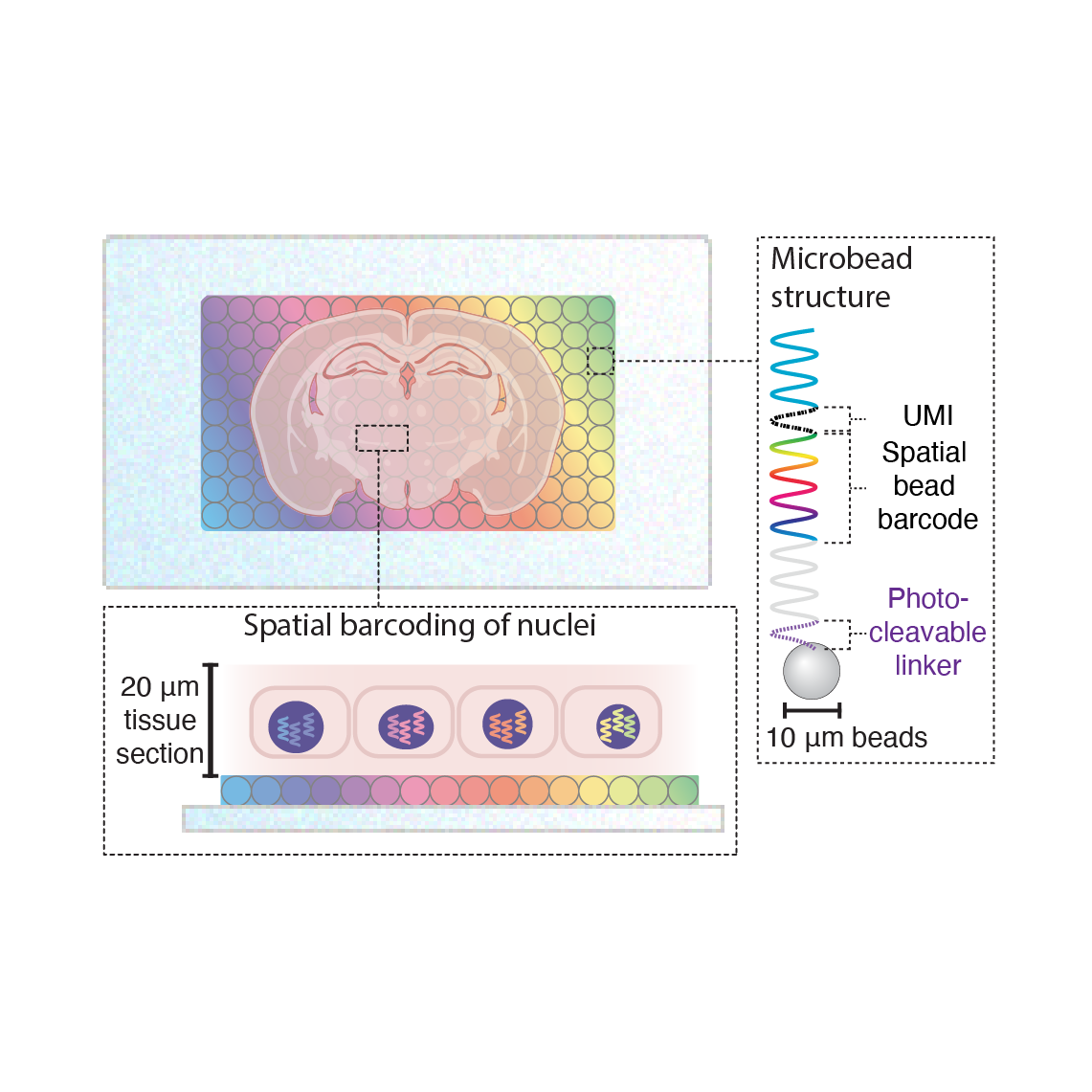
We use spatial single-cell genomics (Slide-tags) to capture DNA mutations, epigenetic states, and gene expression in single nuclei, together with their precise spatial coordinates within intact tissue. Barcoded nuclei are compatible with virtually any established single-cell sequencing workflow, making the platform broadly applicable. We also incorporate fluorescent and histological imaging of tissues to enrich datasets for computational modelling, diagnostic development, and cross-modal integration.
Decoding the molecular fingerprints of exposure
Traditional toxicology studies are costly, slow, and test compounds individually, yet real-world exposures involve complex mixtures. We are developing high-throughput in vitro and in vivo screening platforms designed to enable dose- and time-resolved single-cell multiomic readouts across thousands of exposures simultaneously.

Making sense of high-dimensional data

The multimodal datasets generated by our experimental platforms, spanning the genome, epigenome, transcriptome, and spatial context, require new computational approaches to interpret. We are developing frameworks to integrate these data types, model how exposures drive tissue evolution, and identify vulnerable cell states. A key goal is to build predictive models, trained on well-characterised exposures, that generalise to new chemicals and allow their risks to be assessed in silico.